
Spring Budget 2023 – Capital allowances

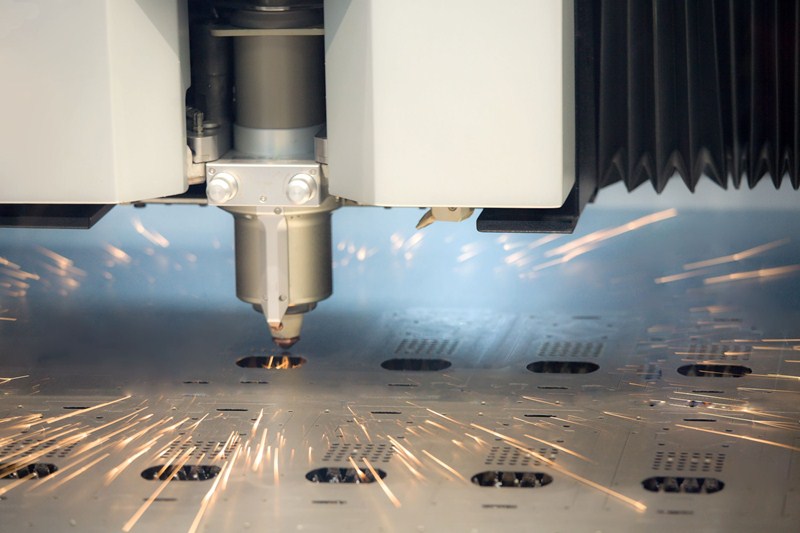
Designed in part to help offset the increased Corporation Tax main rate, the Chancellor announced the introduction of a new ground-breaking 100% first-year capital allowance for qualifying plant and machinery assets. This measure is also expected to help boost business investment and growth.

The new measure, known as full expensing, will initially apply from 1 April 2023 until 31 March 2026 although the Chancellor suggested that it may be made permanent in due course. The measure builds on the success of the super-deduction which ends on 31 March 2023. Under full expensing, for every pound a company invests, their taxes will be cut by up to 25p.

To qualify for full expensing, expenditure must be incurred on the provision of “main rate” plant or machinery. It should be noted that full expensing is available to companies subject to Corporation Tax only. 

Plant and machinery that may qualify for full expensing includes (but is not limited to):

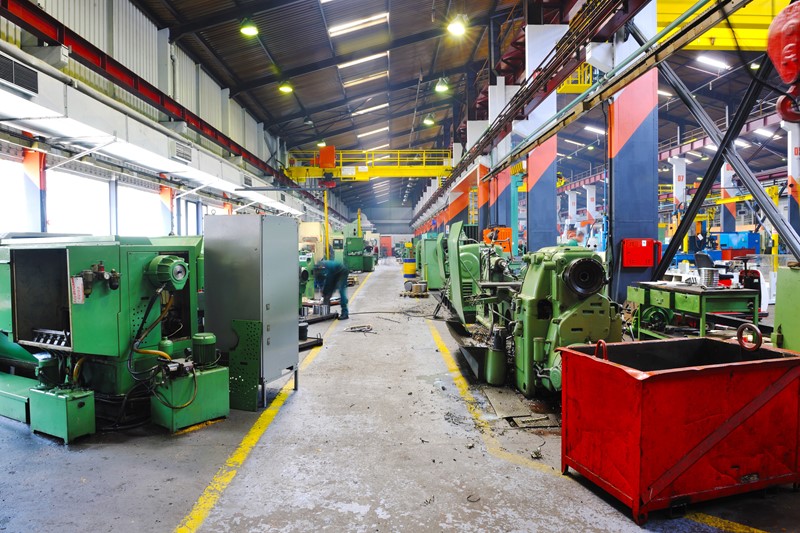
  • machines such as computers, printers, lathes and planers
  • office equipment such as desks and chairs
  • vehicles such as vans, lorries and tractors (but not cars)
  • warehousing equipment such as forklift trucks, pallet trucks, shelving and stackers
  • tools such as ladders and drills
  • construction equipment such as excavators, compactors, and bulldozers
  • some fixtures such as kitchen and bathroom fittings and fire alarm systems in non-residential property.

For “special rate” expenditure, that doesn’t qualify for full expensing, a 50% first-year allowance (FYA) can be claimed instead. The 50% FYA was introduced alongside the super-deduction and was due to end on 31 March 2023. It will now be extended by three years to 31 March 2026.

Businesses can also continue to use the Annual Investment Allowance (AIA) to claim a 100% tax deduction on qualifying expenditure on plant and machinery of up to £1m per year. This includes unincorporated businesses and most partnerships.


Source:HM Treasury| 15-03-2023

Super-deductions finish March 2023

Time is running out to claim the super-deduction offering 130% first-year tax relief. The deduction is available to companies until March 2023. The super-deduction was designed to help incorporated businesses finance expansion after the coronavirus pandemic and to help drive growth.

The super-deduction tax break was introduced on 1 April 2021 and allows businesses to deduct 130% of the cost of any qualifying investment on most new plant and equipment investments that would ordinarily qualify for 18% main rate writing down allowances. This means that for every £1 businesses invest, they can reduce their tax bill by up to 25p. The temporary tax relief applies on qualifying capital asset investments until 31 March 2023. 

In addition, an enhanced first year allowance of 50% on qualifying special rate assets also applies for expenditure within the same period. This includes most new plant and machinery investments that would ordinarily qualify for 6% special rate writing down allowances. 

The super-deduction can only be claimed by companies. This means that self-employed traders are unable to benefit. However, they could benefit from the Annual Investment Allowance (AIA) for investments of up to £1 million. The AIA allows for a 100% tax deduction on qualifying expenditure on plant and machinery. The temporary limit of £1 million is now being made permanent.

Source:HM Treasury| 05-12-2022

What qualifies for First Year Allowances

Businesses can claim a 100% first-year allowance (FYA) on the purchase of certain qualifying Plant and Machinery (P&M). The cash-flow benefit of accelerated tax relief is designed to encourage businesses to invest in capital items which help reduce their carbon footprint by being energy and water efficient. The list of qualifying items includes expenditure on new unused electric vehicles and other cars with zero CO2 emissions.

The list also includes:

  • plant and machinery for gas refuelling stations, for example storage tanks, pumps;
  • gas, biogas and hydrogen refuelling equipment;
  • zero-emission goods vehicles;
  • equipment for electric vehicle charging points;
  • plant and machinery for use in a freeport tax site, only for companies.

The use of the FYA allows businesses to set the full cost of qualifying P&M against their tax bills in the year of purchase. The FYA is only available on the purchase of new cars with zero emissions. Second-hand cars do not qualify for FYAs (but can be eligible for writing down allowances). If claiming the full amount of FYA would create a loss, it is also possible to claim less than the full 100% FYA and claim the balance using writing down allowances.

Source:HM Revenue & Customs| 31-10-2022

Capital Allowance Pools

A Writing Down Allowance (WDA) is available for plant and machinery expenditure that exceeds the Annual investment allowance (AIA) and / or does not qualify for a First-Year Allowance as well as for residual balances of expenditure that has been carried forward from the previous accounting period. The WDA is based on the cost of the items in the year they are acquired.

There are two rates of WDA for plant and machinery. To calculate them, you first group your expenditure into separate capital allowance pools:

  • the main pool – this includes expenditure on most items – the rate is 18%
  • the special rate pool includes special rate expenditure including long-life assets, integral features, certain thermal insulation and some cars – the rate is 6%.

Integral features are:

  • lifts, escalators and moving walkways
  • space and water heating systems
  • air-conditioning and air cooling systems
  • hot and cold water systems (but not toilet and kitchen facilities)
  • electrical systems, including lighting systems
  • external solar shading

It is important to note that the capital allowances regime for integral features only applies to the above list and that buildings themselves don’t qualify for capital allowances. However, before you make a claim (or not) for integral features please speak to us as the rules can be complicated and there are many grey areas.

Source:HM Revenue & Customs| 24-09-2022

Employer company car considerations

If you are thinking about purchasing a company car through a limited company, there are many issues that need to be considered. In this short article we will point out some of the main issues to be aware of, but it is important to properly research this area and weigh up all the available options.

The tax treatment of the purchase will depend on how the purchase of the company car is financed.

The purchase of a company car will be classed as a fixed asset and tax relief will be obtained by way of capital allowances. The amount of capital allowances that can be claimed will fall within one of the following 3 categories:

  • 100% First Year Allowance. New and unused electric or zero emission cars emission cars benefit from 100% capital allowances. This means that 100% of the cost of the car can be deducted in the first year.
  • 18% of the car’s value (main rate allowances). This effectively means that 18% of the purchase price can be deducted from your profits each year before you pay tax.
  • 6% of the car’s value (special rate allowances). This effectively means that 6% of the purchase price can be deducted from your profits each year before you pay tax.

It is clearly demonstrated from the percentages above that the government is encouraging employers to choose more fuel-efficient vehicles by offering a tax incentive.

The company will also be liable to pay Class 1A NICs in respect of the provision of a company car based on the car benefit charges. Employers currently pay Class 1A NICs at the rate of 13.8%. This is increasing to 15.05% from 2022-23. There will be additional Class 1A NICs due where the company pays for private use of fuel. 

The employee benefitting from the use of a company car will also face additional tax costs from the use of their company car. This depends on the rate of tax they pay, the value of the car and its C02 emissions. 
 

Source: HM Revenue & Customs Tue, 22 Mar 2022 00:00:00 +0100

What is plant and machinery?

Capital allowances are the deductions which allow businesses to secure tax relief for certain capital expenditure. HM Treasury has published a factsheet on the super-deduction offering companies a 130% first-year tax relief from 1 April 2021 until 31 March 2023. The factsheet also covers the enhanced first year allowance of 50% on qualifying special rate assets has also been introduced for expenditure within the same period. This includes most new plant and machinery investments that ordinarily qualify for 6% special rate writing down allowances. Both these reliefs are only available to companies.

The factsheet includes a helpful definition of plant and machinery that confirms:

Most tangible capital assets used in the course of a business are considered plant and machinery for the purposes of claiming capital allowances.

There is no exhaustive list of plant and machinery assets. The kinds of assets which may qualify for either the super-deduction or the 50% FYA include, but are not limited to:

  • Solar panels
  • Computer equipment and servers
  • Tractors, lorries, vans
  • Ladders, drills, cranes
  • Office chairs and desks
  • Electric vehicle charge points
  • Refrigeration units
  • Compressors
  • Foundry equipment.
Source: HM Treasury Tue, 01 Mar 2022 00:00:00 +0100

Structures and Buildings Allowance qualifying expenditure

The Structures and Buildings Allowances (SBA) facilitates tax relief for qualifying capital expenditure on new non-residential structures and buildings. The relief applies to the qualifying costs of building and renovating commercial structures. 

The relief was introduced in October 2018 at an annual capital allowance rate of 2% on a straight-line basis. From 1 April 2020, the annual rate was increased to 3% and the corresponding period reduced to 33 and one third years. 

HMRC’s internal manuals consider the meaning of qualifying capital expenditure for this tax relief. The manuals state that:

The amount of qualifying capital expenditure will depend upon whether the person who first uses the building constructed it themselves, or they acquired it unused from a developer. That amount is determined either directly from expenditure incurred on the construction of a building, or by comparing those costs with the sum paid for the relevant interest in the building.

From the total ‘qualifying expenditure’, any amounts that qualify for other capital allowances or are specifically disallowed must be removed. The qualifying expenditure does not change, even when the ownership of the building changes, there are exceptions relating to VAT liabilities and rebates.

Source: HM Revenue & Customs Tue, 23 Nov 2021 00:00:00 +0100

Autumn Budget 2021 – £1 million Annual Investment Allowance

In the Spring Budget earlier this year, the government announced that the temporary Annual Investment Allowance (AIA) cap of £1 million would be extended until 31 December 2021. The Chancellor, delivering the Autumn Budget revealed that the temporary cap will now be extended further until 31 March 2023.

The government says that this move is intended to have positive outcomes for businesses by supporting and encouraging business investment, particularly those that are ineligible for the super-deduction, and by simplifying the tax relief for such investment. The change should also encourage investment in qualifying plant and machinery over the next 17 months.

The AIA allows for a 100% tax deduction on qualifying expenditure on plant and machinery to be deducted from profits before tax. The relief is normally capped at £200,000 per annum but was initially increased to £1 million from 1 January 2019.

This temporary limit of £1 million is a generous allowance and should cover the annual spend of most small and medium sized businesses. The AIA is available for most assets purchased by a business, such as machines and tools, vans, lorries, diggers, office equipment, building fixtures and computers. The AIA does not apply to cars.

The extension in the temporary limit means that businesses thinking of incurring large items of capital expenditure will now have additional time to consider their options during these uncertain times. There are complex transitional rules so the timing of any purchase should be carefully considered.

Source: HM Revenue & Customs Thu, 28 Oct 2021 00:00:00 +0100

130% tax relief for companies

Are you thinking of investing in new plant or other equipment? Remember that the super-deduction offering 130% first-year tax relief is available to companies until March 2023.

The super-deduction tax break was introduced on 1 April 2021 and allows companies to deduct 130% of the cost of any qualifying investment on most new plant and equipment that would ordinarily qualify for 18% main rate writing down allowances. This means that for every £1 a business invests they can reduce their tax bill by up to 25p. The temporary tax relief applies on qualifying capital asset investments until 31 March 2023. 

The super-deduction is designed to help companies finance expansion in the wake of the coronavirus pandemic and help to drive growth. 

In addition, an enhanced first year allowance of 50% on qualifying special rate assets has also been introduced for expenditure within the same period. This includes most new plant and machinery investments that ordinarily qualify for 6% special rate writing down allowances. 

The measures have effect in relation to qualifying expenditure from 1 April 2021, and exclude expenditure incurred on contracts entered into prior to Budget Day, 3 March 2021.

Source: HM Treasury Tue, 10 Aug 2021 00:00:00 +0100

Décor and plant and machinery allowances

Capital Allowances are the deductions which allow businesses to secure tax relief for certain capital expenditure. Capital Allowances are available to sole traders, self-employed persons or partnerships, as well as companies and organisations liable to Corporation Tax.

The Capital Allowance legislation does not specifically define plant and machinery (P&M). However, there is legislation that makes it clear that most buildings, parts of buildings and structures are not P&M. 

An interesting case dating back to 1982 helps to confirm this point of view. The decided case concerns a company that spent money on décor items such as light fittings and wiring as well as decorative items such as wall plaques, tapestries, murals, prints and sculptures. It was accepted that electric wiring was part of the fabric of the building but not the other decorative assets. 

HMRC’s internal guidance states that inspectors should only accept that items of decor are plant if the taxpayer can show that:

  • the trade involves the creation of atmosphere/ambience and in effect the sale of that ambience to its customers; and
  • the items on which plant or machinery allowances are claimed were specially chosen to create the atmosphere that the taxpayer is trying to sell.

For example, a painting on an accountant’s office wall that is owned by the accountant is not plant because selling atmosphere is not part of an accountant’s business.

Source: HM Revenue & Customs Tue, 03 Aug 2021 00:00:00 +0100

Tax when you sell an asset

There are special rules that must be followed when you sell an asset on which capital allowances have been claimed. Capital allowances is the term used to describe the tax relief businesses can claim on certain capital expenditure and thereby reduce the amount of taxable profits.

The sales value is usually the sales price. If you gave the asset away, stopped using the asset or sold it for less than it was worth then the market value should be used.

If you originally claimed 100% tax relief on the item, the business is required to add back the difference to their taxable profits. This is known as a balancing charge. A balancing charge is effectively a way of ensuring that a business does not claim more tax relief than they were entitled to on the purchase of a business asset. The balancing charge works in the opposite way to a capital allowance and increases the amount of profit on which tax is due.

If you originally used writing down allowances, you may have a balancing allowance or a balancing charge.

There are special rules for dealing with any balancing charges or balancing allowances where a business ceases to trade.

Source: HM Revenue & Customs Wed, 02 Jun 2021 00:00:00 +0100

Spring Budget 2021 – Capital allowances

Designed to help offset the increased Corporation Tax main rate and promote investment, the Chancellor announced the introduction of a new ground breaking super-deduction tax relief. The new temporary tax relief applies on qualifying capital asset investments and will apply from 1 April 2021 until 31 March 2023. The new super-deduction is designed to help companies finance expansion in the wake of the coronavirus pandemic and help to drive growth. 

The measure will apply to qualifying expenditures as follows:

  • a super-deduction providing allowances of 130% of most new plant and machinery investments that ordinarily qualify for 18% main rate writing down allowances
  • a first year allowance of 50% will apply to most new plant and machinery investments that ordinarily qualify for 6% special rate writing down allowances

The measure will apply to qualifying expenditure from 1 April 2021 and will exclude expenditures incurred on contracts entered into prior to Budget day, 3 March 2021. Certain expenditures will be excluded. 

The government had also previously announced that the temporary Annual Investment Allowance (AIA) cap would be extended for a further 12 months. The AIA allows for a 100% tax deduction on qualifying expenditure on plant and equipment. The temporary limit of £1 million will remain in place until 31 December 2021 before reverting to the usual £200,000 limit.

Source: HM Revenue & Customs Wed, 03 Mar 2021 00:00:00 +0100

£1 million Annual Investment Allowance extended

In a welcome move, the government has announced that the temporary Annual Investment Allowance (AIA) cap will be extended for a further 12 months until 1 January 2022. The government says that this move is intended to boost confidence as companies look to weather the pandemic and plan for the future. This should also encourage investment on qualifying plant and machinery over the next 12 months.

The AIA allows for a 100% tax deduction on qualifying expenditure on plant and machinery to be deducted from your profits before tax. The relief is normally capped at £200,000 per annum but was temporarily increased to £1 million for a 2-year period from 1 January 2019 to 31 December 2020.

This increased temporary limit is a generous allowance and should cover the annual spend of most small and medium sized businesses. The AIA is available for most assets purchased by a business, such as machines and tools, vans, lorries, diggers, office equipment, building fixtures and computers. The AIA does not apply to cars.

The extension in the temporary limit means that businesses thinking of incurring large items of capital expenditure will now have additional time to consider their options during these uncertain times. There are complex transitional rules so the timing of any purchase should be carefully considered.

Source: HM Government Wed, 18 Nov 2020 00:00:00 +0100

Clock ticking on the Annual Investment Allowance

The Annual Investment Allowance (AIA) allows for a 100% tax deduction on qualifying expenditure on plant and machinery to be deducted from your profits before tax. The relief is normally capped at £200,000 per annum but was temporarily increased to £1 million for a 2-year period from 1 January 2019 to 31 December 2020.

This means that there is now just over two months left to take advantage of the increased limit. If you are thinking of incurring large items of capital expenditure for your business (over £200,000), the timing of such a move should be carefully considered. There could be a significant tax advantage if you accelerate plans, where possible, to incur expenditure before the end of the 2020.

There are transitional rules for businesses whose accounting periods span the operative date of any changes. If the basis AIA changed in the period for which a claim is being made, the AIA must be time-apportioned accordingly.

The AIA is available for most assets purchased by a business, such as machines and tools, vans, lorries, diggers, office equipment, building fixtures and computers. The AIA does not apply to cars.

A claim for AIA must be made in the period the item was bought. This date is defined as the date when a contract was signed – if payment is due within 4 months of the contract being signed – or the actual payment date if it’s due more than 4 months later.

As always, it is important to consider commercial, cashflow and other matters as well as the tax effects. If you are contemplating a large capital purchase please call so that we can help you decide on the best-fit planning opportunities. 

Source: HM Revenue & Customs Wed, 21 Oct 2020 00:00:00 +0100

Spring Budget 2020 – Structures and Buildings Allowances

The Structures and Buildings Allowances (SBA) facilitates tax relief on qualifying capital expenditure on new non-residential structures and buildings. The relief applies to the qualifying costs of building and renovating commercial structures.

The relief was introduced with effect from 29 October 2018, at an annual rate of 2% on a straight-line basis (over 50 years). As part of the Budget measures, the Chancellor has announced an increase in the annual allowance to 3% from 1 April 2020, for businesses within the charge to corporation tax and from 6 April 2020, for businesses within the charge to income tax. This new relief will provide businesses with over £1 billion in additional relief by the end of 2024-25.

The increased rate of relief will help further support business investment in constructing new non-residential structures and buildings including necessary preparatory costs, and the improvement of existing ones. The announcement will also help improve the international competitiveness of the UK’s capital allowances system.

Businesses whose chargeable period spans 1 April (corporation tax) or 6 April (income tax), may claim 2% per year for days in that period before the operative date and 3% for days thereafter. No relief is available where parts of the structure qualify for other allowances, such as Plant & Machinery allowances.