
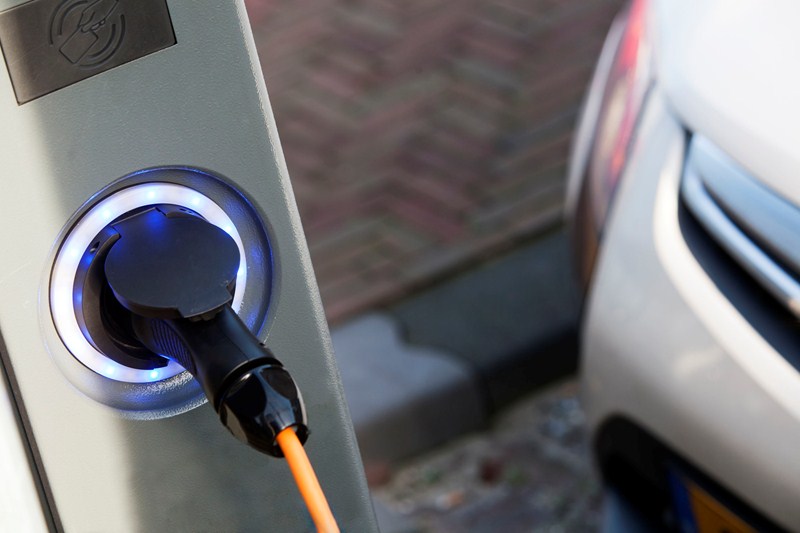
Electric charging of company vehicles at home base

HMRC has published revised guidance concerning the charging of company cars and vans at residential properties. HMRC had previously maintained that the reimbursement of costs in relation to charging a company car or van at a residential property was a taxable benefit. This advice seemed at odds with the exemption on payments and benefits provided in connection with company cars and vans laid out in the relevant legislation.

HMRC has now confirmed, following a review of their position, that the electric charging of company vehicles at home base can now be treated as a tax-free benefit.

HMRC has published revised guidance about this change in interpretation and has stated that:

Following a review of our position, HMRC now accepts reimbursing part of a domestic energy bill, which is used to charge a company car or van, will fall within the exemption provided by section 239 ITEPA 2003.

This means that no separate charge to tax under the benefits code will arise where an employer reimburses the employee for the cost of electricity to charge their company car or van at home. 

HMRC has also said that the exemption will only apply where it can be demonstrated that the electricity was used to charge the company car or van.  Employers will need to make sure that any reimbursement made towards the cost of electricity relates solely to the charging of their company car or van.


Source:HM Revenue & Customs| 16-10-2023

Tax on incentive rewards

Companies may use incentive award schemes to encourage their employees in various ways. For example, to sell more of their own goods and services. The award can be in forms including cash, vouchers or other gifts.

Where an employer meets the tax payable on a non-cash incentive award given to a direct employee, by entering into a PAYE settlement agreement (PSA), the award is not chargeable to tax on the employee.

With the exception of non-cash awards covered by a PSA, the incentive awards made to employees are chargeable as employment income. The value of these awards is calculated as follows:

Cash
The value to use is the total amount of cash awarded.

Vouchers
If the award consists of vouchers, then the value to use is the full cost to the provider of making the award.

Other gifts
If the award is something other than vouchers, then the charge is usually the full cost to the provider of making the award. There are certain exceptions for the low paid.

There are also concessions which HMRC makes to enable you to say thank you to staff including encouragement awards, suggestion schemes and to reward long service.

Source:HM Revenue & Customs| 18-09-2023

Calculate tax on company cars

Where an employee with a company car is provided with fuel for their own private use by their employers, the default position is that the employee is required to pay the car fuel benefit charge. The charge is determined by reference to the CO2 rating of the car applied to a fixed amount, currently £27,800. For example, a CO2 rating of 150g/km would create a taxable benefit of £9,730.

The car fuel benefit charge is not applicable when the employee pays for all their private fuel, this includes commuting to and from work. Employees should keep a log of private mileage and can then use the published advisory fuel rates to repay the cost of fuel used for private travel to their employer. In this case, HMRC will accept that there is no car fuel benefit charge, and the employee will save the Income Tax charge on the private car fuel. It will usually be much cheaper to repay your employer for private fuel rather than to pay the Income Tax charge especially if private mileage is relatively low.

The advisory fuel rates are intended to reflect actual average fuel costs and are updated quarterly. However, the use of the advisory fuel rates is not binding if the employer can demonstrate that employees cover the full cost of private fuel by repaying at a lower rate per mile. There is also a lower advisory rate if the company car is fully electric.

Source:HM Revenue & Customs| 11-09-2023

Tax on trivial benefits

There is a benefit-in-kind (BiK) trivial exemption that applies to small non-cash benefits like a bottle of wine, or a bouquet of flowers given occasionally to employees, or any other BiK classed as 'trivial' that falls within the exemption. By taking advantage of the exemption employers can simplify the treatment of BiKs whilst at the same time offering a tax efficient way to give small gifts to employees.

The trivial benefit rules provide a great opportunity to provide small rewards as an incentive to employees. The main caveat being that the gifts are not provided as a reward for services performed or as part of the employees’ duties. However, gifts to employees on milestone events such as the birth of a child or a marriage or other gestures of goodwill would usually qualify.

The employer also benefits as the trivial benefits do not have to be included on PAYE settlement agreements or disclosed on P11D forms. There is also a matching exemption from Class 1A National Insurance contributions.

The tax exemption applies to trivial BiKs where the BiK:

  • is not cash or a cash-voucher; and
  • costs £50 or less; and
  • is not provided as part of a salary sacrifice or other contractual arrangement; and
  • is not provided in recognition of services performed by the employee as part of their employment, or in anticipation of such services.

The rules also allow directors or other office-holders of close companies and their families to benefit from this relief but with an annual cap of £300. The £50 limit remains for each gift but could allow for up to £300 of non-cash benefits to be withdrawn per person per year. The £300 cap does not apply to employees. If the £50 limit is exceeded for any gift, the value of the benefit will be taxable.

Source:HM Revenue & Customs| 04-09-2023

On your bike tax-free

The Cycle to Work scheme was introduced over 20 years ago to help promote the use of environmentally friendly modes of transport.

The scheme allows employers to provide bicycles and cyclists’ safety equipment to employees as a tax-free benefit. The scheme must be offered to all employees and the bike must be used mainly for qualifying journeys, i.e., between home and work. However, pleasure use of the bike is also allowed. Where the scheme conditions are satisfied employees can benefit from a significant tax and National Insurance Contributions (NICs) reduction. In addition, there is no employer liability to NICs.

The cycle to work benefits only relate to the loan period, however, it is commonplace for an employer or a third party bicycle provider to offer the employee the bicycle / equipment they have been using for sale after the loan period has ended. The bike may be offered to the employee for sale at a fair market value, but this must be done as a separate agreement.

Employers of all sizes across the public, private and voluntary sectors are eligible to take part in the scheme to provide (technically loan) bicycles and cyclists’ safety equipment to employees as a tax-free benefit. The scheme can also be used for electronic bikes known as e-bikes.

Source:HM Revenue & Customs| 21-08-2023

Tax exempt private medical costs

There is no requirement for employers to pay tax and National Insurance on certain health benefits covered by tax concessions or exemptions. For example, there is no requirement to report employees’ medical or dental treatment or insurance if they are a part of a salary sacrifice arrangement. 

In addition, the following health benefits can be provided tax free:

  • A maximum of one health-screening assessment and one medical check-up in any year.
  • Eye tests required by health and safety legislation for employees who use a computer monitor or other type of screen.
  • Glasses or contact lenses required by employees for working on computer monitors or other types of screen.
  • Medical treatment for employees working overseas. The employer must have committed in advance to pay for this treatment or must pay the provider directly for the employee’s treatment or insurance.
  • Medical treatment or insurance related to injuries or diseases that result from your employee’s work.
  • Medical treatment to help an employee return to work. This allows the employer to pay up to £500 in costs for an employee to return to work.
  • Any medical or dental treatment or insurance provided that is not exempt must be reported to HMRC. Employers may be required to deduct and pay tax and National Insurance on these amounts.
Source:HM Revenue & Customs| 11-06-2023

Filing deadline for share scheme operators

There are a number of government approved share schemes which offer tax advantages to employees. The approved schemes are Share Incentive Plans (SIPs), Save As You Earn (SAYE) schemes, Company Share Option Plans (CSOPs) and Enterprise Management Incentive (EMI) schemes.

The deadline for submitting the online employment related securities annual return for the tax year 2022-23 is 6 July 2023. If a return remained outstanding after this date, then an automatic late filing penalty of £100 will be issued. If the return remains outstanding on 6 October 2023 a further automatic penalty of £300 will be issued. There is an additional penalty of £300 if the return is still outstanding after 6 months i.e., on 6 January 2024.

Even if a share scheme operator has received and paid the initial penalty, they must still submit an end of year or nil return to meet their filing obligations.

Employers that don’t submit annual returns on-time run the risk that they and /or their employees may lose any tax advantages from the scheme.

Source:HM Revenue & Customs| 15-05-2023

What is a P11D?

A P11D form is a form used by employers to list certain ‘benefits in kind’ provided to directors or employees. P11D forms are used to provide information to HMRC on all Benefits in Kind (BiKs), including those under the Optional Remuneration Arrangements (OpRAs) unless the employer has registered to payroll benefits. This is known as payrolling and removes the requirement to complete a P11D for the selected benefits. The P11D form is submitted annually to HMRC.

The deadline for submitting the 2022-23 form is 6 July 2023. The form can be submitted using commercial software or via HMRC’s PAYE online service. Paper P11D and P11D(b) forms are no longer accepted by HMRC. Employees must also be provided with a copy of the information relating to them on these forms by the same date.

A P11D(b) is still required for Class 1A National Insurance payments regardless of whether the benefits are being reported via P11D or payrolled. The deadline for paying Class 1A NICs is 22 July 2023 (or 19 July if paying by cheque).

Where no benefits were provided from 6 April 2022 to 5 April 2023 and a form P11D(b) or P11D(b) reminder is received, employers can either submit a 'nil' return or notify HMRC online that no return is required. Employers should ensure that they complete their P11D accurately, including all the details of cars and loans provided. There are penalties of £100 per 50 employees for each month or part month a P11D(b) is late. There are also penalties and interest for late payments.

Any tax or National Insurance due for 2022-23 under a PAYE Settlement Agreement (PSA) needs to be paid electronically to clear into HMRC’s bank account by 22 October 2023 (19 October 2023 for payments by cheque). This does not need to be reported on a P11D.

Source:HM Revenue & Customs| 08-05-2023

What is a Share Incentive Plan?

Share Incentive Plans (SIPs) were first introduced in July 2000 to give employees tax and NICs savings when they buy or are given shares in the company they work for.

Provided all the qualifying conditions are met, shares which are obtained under a SIP are not liable to Income Tax or NICs at the time they are acquired and there is no CGT for accrued gains whilst the shares are held in a SIP. This includes holding the shares in a SIP for 5-years.

There are four different ways that shares can be obtained in a SIP:

  • An employer can give employees awards of free shares (which can be performance related e.g., based on the performance of individuals, teams, divisions or work units) up to a maximum of £3,600 p.a. tax-free.
  • Employees can buy shares valued at up to £1,800 per year out of their pre-tax salary. This is subject to this being no more than 10% of an employee’s annual salary.
  • Employers can give up to two free shares for each share an employee buys.
  • Dividends from any of the free, partnership or matching shares can be reinvested tax free in the purchase of further shares (if allowed by the employer).
Source:HM Treasury| 27-02-2023

Miscellaneous benefits in kind

The list of miscellaneous company benefits that can be provided tax-free to employees is quite short. However, some of the benefits that can be provided include the following:

  • Medical insurance or medical treatment for employees working abroad.
  • One annual medical health check and / or health-screening assessment.
  • Exempt loans to employees. There are a number of scenarios where beneficial loans are exempt and employers might not have to report anything to HMRC or pay tax and National Insurance. The most common exemption relates to small loans with a combined outstanding value to an employee of less than £10,000 throughout the whole tax year.
  • Living accommodation. There are special rules for the provision of living accommodation to employees under certain circumstances. In most cases, employees will pay tax on any living accommodation provided by an employer unless they qualify for an exception.

An exception for living accommodation will usually apply in cases where:

  • the accommodation is necessary for an employee to do their job properly; 
  • it’s customary to have living accommodation with the job and it means the employee can perform their job better; and
  • the employee faces a special threat to their security because of their job, and the living accommodation is in place to help protect them.

There is no requirement to pay tax on benefits and expenses covered by concessions or exemptions and they do not need to be included on a tax return.

Source:HM Revenue & Customs| 20-02-2023

Vehicle benefit charges from April 2023

The vehicle benefit charges for 2023-24 have been announced. Where employees are provided with fuel for their own private use by their employers, the car fuel benefit charge is also applicable. The fuel benefit charge is determined by reference to the CO2 rating of the car, applied to a fixed amount. The car fuel benefit charge will increase in 2023-24 to £27,800 (from £25,300). The fuel benefit is not applicable when the employee pays for all their private fuel use.

The standard benefit charge for private use of a company van will increase to £3,960 (from £3,600). A company van is defined as ‘a van made available to an employee by reason of their employment’. There is an additional van fuel benefit charge for a van with significant private use. The limit will increase in 2023-24 to £757 (from £688). If private use of the van is insignificant, then no benefit will apply.

Since 6 April 2021, the van benefit charge has been reduced to zero for vans that produce zero carbon emissions. This measure supports the governments climate change agenda by encouraging the uptake up of vans that emit zero carbon emissions.

Source:HM Revenue & Customs| 16-12-2022

Accommodation expenses and benefits

There are special rules for the provision of living accommodation to employees under certain circumstances. In most cases, employees will pay tax on any living accommodation provided by an employer unless they qualify for an exception. However, where an employee qualifies for an exception, there is no tax to pay on the provision of living accommodation. The definition of living accommodation includes houses, flats, houseboats, holiday homes and apartments. It does not include hotel rooms or board and lodgings.

An exception for living accommodation will usually apply in cases where:

  • the accommodation is necessary for an employee to do their job properly;
  • it’s customary to have living accommodation with the job and it means the employee can perform their job better; and
  • the employee faces a special threat to their security because of their job, and the living accommodation is in place to help protect them.

HMRC publishes a list of some of the main occupations that typically provide living accommodation. This includes agricultural workers living on farms or estates, pub and off-license managers living on premises, police officers and prison governors.

Employees provided with living accommodation can also be provided with other related benefits such as:

  • heating and lighting the accommodation;
  • the repair, maintenance and decoration of the interior;
  • the cost of servants, gardeners etc; and
  • provision of furniture, domestic appliances and other equipment.
Source:HM Revenue & Customs| 05-09-2022

Company Share Option Plans

There are a number of government approved share schemes which offer tax advantages to employees. One of these schemes is known as the Company Share Option Plans (CSOP). Under a CSOP, employees do not pay Income Tax or NICs provided the qualifying conditions are met. This applies to a qualifying option to buy up to £30,000 worth of shares at a fixed price. However, there may be a CGT liability when the shares are eventually sold.

The rules state you will not be chargeable to Income Tax if you exercise your options at a time when the CSOP scheme remains tax-advantaged and:

  • The exercise occurs between 3 and 10 years from the date of grant.
  • Where the plan rules allow, you cease employment within 3 years of the date of grant and you exercise within 6 months of the date you ceased for one of the following reasons:
    • injury or disability
    • redundancy
    • retirement
  • Where the plan rules allow, and you exercise your option within three years of the date of grant and within six months of the ‘event’ because:
    • your employment is transferred under the TUPE regulations;
    • your employer has been sold or transferred out of the group; and
    • you wish to accept a cash takeover offer for the shares, subject to certain conditions (the scheme organiser will advise you if this applies).
  • Where the plan rules allow your executors to exercise your options within twelve months of the date of your death.

The exercise of an option in all other circumstances will be chargeable to Income Tax.

Source:HM Revenue & Customs| 30-08-2022

PAYE settlement agreements

A PAYE Settlement Agreement (PSA) allows employers to make one annual payment to cover all the tax and National Insurance due on small or irregular taxable expenses or benefits for their employees.

The expenses or benefits included in a PSA must belong to one of the following categories;

  • minor – e.g., a small birthday present
  • irregular – e.g., one-off relocation expenses over £8,000 (these are tax-free below £8,000)
  • impracticable (difficult to work out the value of or divide up between individual employees) – e.g., shared cars or taxi journeys.

Employers that are required to notify HMRC of the value of items included in a PAYE settlement agreement (PSA) must do so using form PSA1. The deadline for applying for a PSA for 2021-22 is 5 July 2022.

A PSA agreement will continue until either the employer or HMRC cancels the agreement or if changes are required. Employers do not need to renew the PSA each tax year.

The deadline for an electronic payment for a PSA for the year ended 5 April 2022 – to clear into HMRC’s bank account – is 22 October 2022. Employers that pay by cheque must ensure that the payment reaches HMRC’s Accounts Office by 19 October 2022.  There may be interest and / or a late payment penalty due where the payment is made late.

Source: HM Revenue & Customs Tue, 26 Apr 2022 00:00:00 +0100

On your bike – cycle to work exemption

The Cycle to Work scheme was introduced over 20 years ago to help promote the use of healthy ways to commute to work using an environmentally friendly mode of transport.

The scheme allows employers to provide bicycles and cyclists’ safety equipment to employees as a tax-free benefit. The scheme must be offered to all employees and the bike must be used mainly for qualifying journeys i.e., between home and work. However, pleasure use of the bike is also allowed. Where the scheme conditions are satisfied employees can benefit from a significant tax and National Insurance Contributions (NICs) reduction. In addition, there is no employer liability to NICs.

The cycle to work benefits only relate to the loan period, however, it is commonplace for an employer or a third-party bicycle provider to offer the employee the bicycle / equipment they have been using for sale after the loan period has ended. The bike may be offered to the employee for sale at a fair market value, but this must be done as a separate agreement.

Employers of all sizes including those in the public, private and voluntary sectors are eligible to take part in the scheme to provide (technically loan) bicycles and cyclists’ safety equipment to employees as a tax-free benefit. The scheme can also be used for electronic bikes known as e-bikes.

Source: HM Revenue & Customs Tue, 29 Mar 2022 00:00:00 +0100