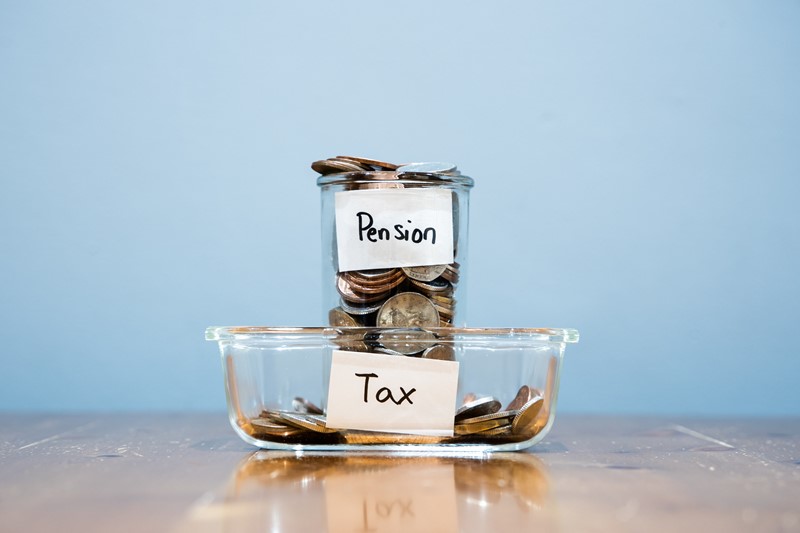

Adding employees to a workplace pension scheme

Automatic enrolment for workplace pensions has helped many employees make a start on providing for their retirement with the advantage that employers and government are also contributing to their pension pot.

The law states that employers must automatically enrol workers into a workplace pension if they are aged between 22 and State Pension Age and earn more than the minimum earnings threshold. The minimum threshold has remained fixed at £10,000 since 6 April 2014. The employee must also work in the UK and not be a member of an existing, qualifying pension scheme. Employees can opt-out of joining the pension scheme if they wish.

Under the rules, employers are also required to offer their workers access to a workplace pension when a change in their age or earnings makes them eligible. This must be done within 6-weeks of the day they meet the criteria.

Under the automatic enrolment rules the employer and the government also add money into the pension scheme. There are minimum contributions that must be made by employers and employees.

Both the employer and employee need to contribute. There is a minimum employer contribution of 3% and employee contribution of 4%. This means that contributions in total will be a minimum of 8%: 3% from the employer, 4% from the employee and an additional 1% tax relief.

The contributions are based on the qualifying earnings brackets highlighted above; this means that for many employees the 8% contribution rate will not be based on their full salary.


Source:Pensions Regulator| 06-03-2023

Limits to tax relief for pension contributions

Under current rules, you can claim tax relief for your private pension contributions. The annual allowance for tax relief on pensions is £40,000 for the current tax year. There is a three year carry forward rule that allows you to carry forward any unused amount of your annual allowance from the last three tax years if you have made pension savings in those years. There is also a lifetime limit for tax relief on pension contributions. The limit is currently £1,073,100 and will remain frozen at that level until at least April 2026.

You can get tax relief on private pension contributions worth up to 100% of your annual earnings, subject to the overriding limits. Tax relief is paid on pension contributions at the highest rate of Income Tax paid.

This means that if you are:

  • A basic rate taxpayer you get 20% pension tax relief
  • A higher rate taxpayer you can claim 40% pension tax relief
  • An additional rate taxpayer you can claim 45% pension tax relief

The first 20% of tax relief is usually automatically applied by your employer with no further action required if you are a basic-rate taxpayer. If you are a higher rate or additional rate taxpayer, you can claim back any further reliefs on your Self-Assessment tax return.

The above applies for claiming tax relief in England, Wales or Northern Ireland. There are regional differences if you are based in Scotland.

Source:HM Revenue & Customs| 02-01-2023

What is a defined contribution pension?

A defined contribution pension (sometimes referred to as a money purchase pension scheme) is a type of pension scheme where the pension pot is based on how much money is paid into the scheme. This is markedly different to a defined benefit pension schemes which usually relates to workplace pensions where the pension provider promises to give you a certain amount each year when you retire.

A defined contribution pension can be a company or private pension. The pension pot is based on monies added by you and / or your employer. This money is invested by the pension provider. The final return with these pensions is not guaranteed and the value of the pension pot can go up or down depending on how investments perform.

There are three main options available at retirement, lifetime annuity, flexi-access drawdown and a lump sum payment. These options can be used on their own or in combination. The first 25% drawdown is tax-free and the remainder is taxed at the individual’s marginal rate.

There are no overall limits to employer or employee contributions and no upper limit to the total amount of pension saving that can be built up. However, there are limits that affect tax relief on pension contributions including an annual and lifetime allowance.

Source:Pensions Regulator| 05-12-2022

Private pension contributions tax relief

Under current rules, you can claim tax relief for your private pension contributions within certain limitations.

The current annual allowance for tax relief on pension contributions is £40,000. You can also carry forward any unused amount of your annual allowance from the last three tax years if you have made pension savings in those years.

Additionally, there is a lifetime limit for tax relief on pension contributions. The limit is currently £1,073,100.

You can qualify for tax relief on private pension contributions worth up to 100% of your annual earnings, subject to the overriding limits. Tax relief is paid on pension contributions at the highest rate of Income Tax paid.

This means that if you are:

  • A basic rate taxpayer qualifies for 20% pension tax relief.
  • A higher rate taxpayer qualifies for 40% pension tax relief.
  • An additional rate taxpayer qualifies for 45% pension tax relief.

The first 20% of tax relief is usually applied by your employer with no further action required. If you are a higher rate or additional rate taxpayer, you can claim back any further reliefs on your Self-Assessment tax return.

The above applies for claiming tax relief in England, Wales or Northern Ireland. There are regional differences if you are based in Scotland.

Source:HM Revenue & Customs| 14-11-2022

The pension savings annual allowance

The pension savings annual allowance for tax relief on pensions has been fixed at £40,000 since 6 April 2014. The annual allowance is further reduced for high earners. Since 6 April 2020, the tapered annual allowance increased from £150,000 to £240,000. 

This means that anyone with income below £240,000 is not affected by the tapered annual allowance rules. Those earning over £240,000 will begin to see their £40,000 annual allowance tapered. For every complete £2 income exceeds £240,000 the annual allowance is reduced by £1. The annual allowance cannot be reduced to be less than £4,000. The annual allowance can also be affected if the taxpayer flexibly accessed their pension pot.

There is a three-year carry forward rule that allows taxpayers to carry forward unused annual allowance from the last three tax years if they have made pension savings in those years. The calculation of the exact amount of unused annual allowance that can be carried forward can be complicated especially if subject to the tapered annual allowance.

There is also a pensions lifetime allowance that needs to be considered. The limit is currently £1,073,100.

Source:HM Revenue & Customs| 12-09-2022

Auto enrolment for care workers

Automatic enrolment for workplace pensions has helped many employees make provision for their retirement, with employers and government also contributing to make a larger pension pot.

The law states that employers must automatically enrol workers into a workplace pension if they are aged between 22 and State Pension Age and earn more than minimum earning threshold. The minimum threshold has remained fixed at £10,000 since 6 April 2014. The employee must also work in the UK and not be a member of a qualifying work pension scheme. Employees can opt-out of joining the pension scheme if they wish.

These rules apply if you directly employ a care worker to provide you with care and support, often called a personal assistant or a personal care assistant. It is important to note that you will be classed as an employer whether or not you pay using money provided by your local authority or the NHS in the form of direct payments or a personal budget to pay your personal care assistant, or if you use your own money.

The main exception to this rule is if the care worker is provided by an agency, and the agency pays the personal care assistant’s National Insurance contributions. If this is the case, then the agency will be responsible for the automatic enrolment requirements.

Source: Pensions Regulator Tue, 15 Mar 2022 00:00:00 +0100

Pension triple-lock abandoned for one year

The government has confirmed that its triple-lock guarantee on pensions is to be abandoned for one year. The guarantee was first introduced in 2010 and has remained in place until now. This guarantee has seen the full yearly State Pension increase by over £2,050 in this period.

The triple-lock is the mechanism used to calculate increases to the state pension each year. Under the triple-lock guarantees the basic state pension rises by whichever is the highest out of average earnings growth, inflation or 2.5%.

The government is concerned that the growth in earnings will be between 8% and 8.5% and has decided that setting aside for one year the use of average earnings growth figures for State Pensions would be prudent. This large growth figure has been caused by the unprecedented fluctuations to earnings caused by the COVID-19 pandemic.

The other two elements of the triple-lock will remain in place, meaning that the State Pension will be uprated by the higher of inflation or 2.5%.

The government has argued that this pause in the triple-lock is the fairest approach for both pensioners and younger taxpayers. However, this decision will leave many of those in receipt of the State Pension deeply disappointed with this decision and worried that this is the start of further broken promises.

It had been rumoured for quite some time that HM Treasury was exploring ways to suspend the triple-lock as it became apparent that the earnings growth figure would appear to be artificially high.

Source: Department for Work & Pensions Tue, 14 Sep 2021 00:00:00 +0100

Covering pension contributions with unused allowances

The annual allowance for tax relief on pensions is currently set at £40,000. The annual allowance is further reduced for high earners. This means that if your income is in excess of £240,000 you will usually begin to see your £40,000 annual allowance tapered. For every complete £2 your income exceeds £240,000 the annual allowance is reduced by £1. The annual allowance can also be reduced if you have flexibly accessed your pension pot.

If you have not used all your annual allowance in a tax year, then the unused allowance can usually be carried forward to the current tax year and added to the current year’s annual allowance. The calculation of the exact amount of unused annual allowance that can be carried forward can be complicated especially if you are subject to the tapered annual allowance. 

Normally, you can carry forward unused allowance from the three previous tax years. You do not need to report this to HMRC. If you have unused annual allowances from more than one year, you need to use the allowance in order of earliest to most recent. Any remaining balances can be used in future tax years, subject to the usual time limits. You do not need to report this to HMRC.

HMRC’s pension calculator can also help you check if you have any unused annual allowance to carry forward.
 

Source: HM Revenue & Customs Tue, 24 Aug 2021 00:00:00 +0100

Added protection for pension savers

The new Pensions Scheme Act received Royal Assent on 11 February 2021. The Act covers a number of important pensions-related issues and has faced a long journey through parliament, starting in October 2019, that included delays due to both Brexit and the coronavirus pandemic.

The Act has been described by government as ‘the biggest shake-up of UK pensions for decades. The Act will provide for enhanced powers for the Pensions Regulator, including the power to impose civil penalties of up to £1 million and three new criminal offences.

One of new criminal offences, that could result in up to seven years in prison, will target bosses who run pension schemes into the ground, or plunder pots to line their own pockets. This is expected to strengthen the regulators’ powers to take efficient and timely actions to protect members’ hard-earned savings.

The legislation also introduces a new pensions dashboard creating one single platform to access and review pension pots, and the creation of new style collective defined contribution (CDC) schemes. CDCs have the potential to increase returns for millions, whilst being more sustainable for both workers and employers.

The Act also aims to ensure that pensions help with climate change governance by moving towards a net zero future through climate risk reporting.

The measures in the Act will come into force at different times as secondary legislation is introduced.

Source: Department for Work & Pensions Wed, 17 Feb 2021 00:00:00 +0100

Tax on an inherited private pension

Private pensions can be an efficient way to pass on wealth, but it is important to consider what, if any, tax will be payable on an inherited private pension. The person who died will usually have nominated the recipient by telling their pension provider that they should inherit any monies left in their pension pot. If the nominated person can’t be found or has since died, the pension provider may make payments to someone else instead.

In general, if you inherit a private pension and the owner of the pension fund died before the age of 75, the benefits left in a private pension can be paid as a lump sum or as drawdown income with no tax to pay. If the deceased passed away after the age of 75 the pension will be taxed at your marginal Income Tax rate, so 20% if you are a basic rate taxpayer or 40% if you are in the higher tax bracket and 45% if you pay tax at the top rate. The rates may differ if you are a Scottish taxpayer.

There are restrictions on pensions from a defined benefit pot (usually workplace pensions) whereby the pension can usually only be paid to a dependant of the person who died, for example a husband, wife, civil partner or child under 23. This rule can sometimes be changed if the pension fund allows, but the inheritance will be taxed at up to 55% as an unauthorised payment.

The rules on inheriting a pension are complex and depend on what type it is and how old the holder was when they died. For example, you may also have to pay tax if the pension pot owner was under 75 but had pension savings worth more than £1,073,100 (the lifetime allowance) when they died. There are also important time limits that must be followed.

Source: HM Revenue & Customs Wed, 13 Jan 2021 00:00:00 +0100

The private pensions’ annual allowance

The annual allowance for tax relief on pensions has been fixed at £40,000 since 6 April 2014. The annual allowance is further reduced for high earners. Since 6 April 2020, the tapered annual allowance increased from £150,000 to £240,000. 

This means that anyone with income below £240,000 is no longer affected by the tapered annual allowance rules. Those earning over £240,000 will begin to see their £40,000 annual allowance tapered. For every complete £2 income exceeds £240,000 the annual allowance is reduced by £1. The annual allowance can also be lower if the taxpayer flexibly accessed their pension pot.

There is a three year carry forward rule that allows taxpayers to carry forward unused annual allowance from the last three tax years if they have made pension savings in those years. The calculation of the exact amount of unused annual allowance that can be carried forward can be complicated especially if you are subject to the tapered annual allowance.

There is also a pensions lifetime allowance that needs to be considered. The lifetime allowance limit is currently £1,073,100.

Source: HM Revenue & Customs Sun, 13 Sep 2020 00:00:00 +0100

Last chance for pensions relief?

There has been much press speculation that the Government is considering cutting higher rate tax relief for pension contributions in the March Budget. However, many Tory MPs are said to be up in arms at such a move and have been trying to quash such a reduction.

There are also concerns that such a complex change to pensions relief could come into effect with very little advance warning.

If you pay tax at a higher rate, the pension relief you can claim should not be underestimated. Even if we don’t see a change in the upcoming Budget this is a move that has been mooted for quite some time and could happen over the coming years. If you are considering making a pension contribution this year, you should consider maximising your contributions just in case changes are announced on Budget day.

You can currently claim tax relief at your highest rate of Income Tax for your private pension contributions, subject to the overriding limits. There is an annual allowance for tax relief on pensions of £40,000. There is also a three-year carry forward rule that allows you to carry forward any unused amount of your annual allowance from the last three tax years if you have made pension savings in those years. There is also a lifetime limit for tax relief on pension contributions. The limit is currently £1.055 million.

Please note, there is a tapered reduction of the annual allowance for high earners. If your income is in excess of £150,000 you will suffer a reduction in your annual allowance. For every complete £2 your income exceeds £150,000 the annual allowance is reduced by £1, up to a maximum reduction of £30,000 if your income is over £210,000.

Carry forward unused pension tax allowance

The annual allowance for tax relief on pensions is currently set at £40,000. The annual allowance is further reduced for high earners. If your income is in excess of £150,000 you will usually have your allowance tapered. This works by reducing your annual allowance by £1 for every £2 your income exceeds £150,000 up to a maximum reduction of £30,000 if your income is over £210,000.

However, any unused annual allowance can usually be carried forward to the current tax year and added to the current year’s annual allowance. The calculation of the exact amount of unused annual allowance that can be carried forward can be complicated especially if you are subject to the tapered annual allowance.

You can carry forward unused allowance from the three previous tax years. You do not need to report this to HMRC. If you have unused annual allowances from more than one year, you need to use the allowance in order of earliest to most recent. Any remaining balances can be used in future tax years, subject to the usual time limits.

This annual allowance only applies to pension savings made to your UK registered pension schemes, or to overseas schemes where either you or your employer qualifies for UK tax relief. 

Please contact us if you need help to calculate any past, unused pensions relief that you could utilise to reduce your current year's tax bill.

Top up your pension pots

You can claim tax relief for your private pension contributions. The current annual allowance for tax relief on pensions is £40,000. Remember, that there is now just 3 months left in the current tax year in which to maximise the amount of tax relief you can claim by topping up your pension pot.

There is a three-year carry forward rule that allows you to carry forward previous years unclaimed allowances. There is also a lifetime limit for tax relief on pension contributions. The limit is currently £1.055 million.

You can claim tax relief on private pension contributions worth up to 100% of your annual earnings, subject to the overriding limits. Higher rate tax relief is allowed.

This means that if you are:

  • A basic rate taxpayer you get 20% pension tax relief
  • A higher rate taxpayer you can claim 40% pension tax relief
  • An additional rate taxpayer you can claim 45% pension tax relief

The first 20% of tax relief is usually automatically applied by your employer with no further action required if you are a basic-rate taxpayer. If you are a higher rate or additional rate taxpayer, you can claim back any further reliefs on your Self-Assessment tax return.

The Income Tax rates are different in Scotland.

Tax relief for private pension contributions

You can claim tax relief for your private pension contributions. The annual allowance for tax relief on pensions is £40,000 for the current tax year. There is also a facility to carry forward any unused amount of your annual allowance from the last three tax years if you have made pension savings in those years. There is also a lifetime limit for tax relief on pension contributions. The current lifetime limit is £1.03 million.

You can obtain tax relief on private pension contributions worth up to 100% of your annual earnings, subject to the overriding limits. Tax relief is allowed at your highest rate of Income Tax paid.

This means that if you are:

  • A basic rate taxpayer, you can claim 20% pension tax relief
  • A higher rate taxpayer, you can claim 40% pension tax relief
  • An additional rate taxpayer, you can claim 45% pension tax relief

The first 20% of tax relief is usually deducted by your employer, with no further action required if you are a basic-rate taxpayer. If you are a higher rate or additional rate taxpayer, you can claim back any further reliefs on your Self-Assessment tax return.

The above applies for claiming tax relief in England, Wales or Northern Ireland. There is an interesting regional difference if you are based in Scotland. If you are a Scottish taxpayer paying Income Tax at the starter rate of 19%, you can still claim tax relief of 20% and are not required to pay back the difference. As with the rest of the UK, basic rate taxpayers in Scotland pay 20% Income Tax and qualify for 20% pension tax relief. There are also three higher rates, an intermediate rate of 21%, a higher rate of 41% and an additional rate of 46% where further tax relief can be claimed.