
Vaping products duty schemes

The new Vaping Products Duty (VPD) and Vaping Duty Stamps (VDS) are being introduced from 1 October 2026. In advance of the launch of the new schemes, HMRC opened applications for approval for manufacturers, importers and warehouse keepers on 1 April 2026.

This means that businesses affected by these changes should act now. Early registration is essential to ensure approval is in place before the rules take effect, particularly as applications can take time to process and at least 45 working days if further information is needed.

VPD will apply to all vaping liquids, whether they contain nicotine or not, with a flat-rate duty charged. At the same time, duty stamps must be affixes to individual retail products to show the duty has been accounted for. These stamps are designed to support compliance and help tackle illicit trade.

There is a transitional period to allow businesses to prepare. Retailers can continue to sell existing unstamped stock until 31 March 2027, but all new products from October 2026 must meet the new requirements and have a duty stamp.

HMRC’s Director of Indirect Tax, said:

‘From 1 April 2026, UK vape manufacturers, importers and warehouse keepers can apply to HMRC for Vaping Products Duty and Vaping Duty Stamps Scheme approval, which is essential for these businesses to continue trading legally from 1 October.

Our guidance brings all the key information together, and using it now will help firms prepare properly, avoid errors and ensure they can continue trading when the new requirements apply from October.

Source:HM Revenue & Customs| 06-04-2026

Small duty cuts on draught products from 1 February 2025

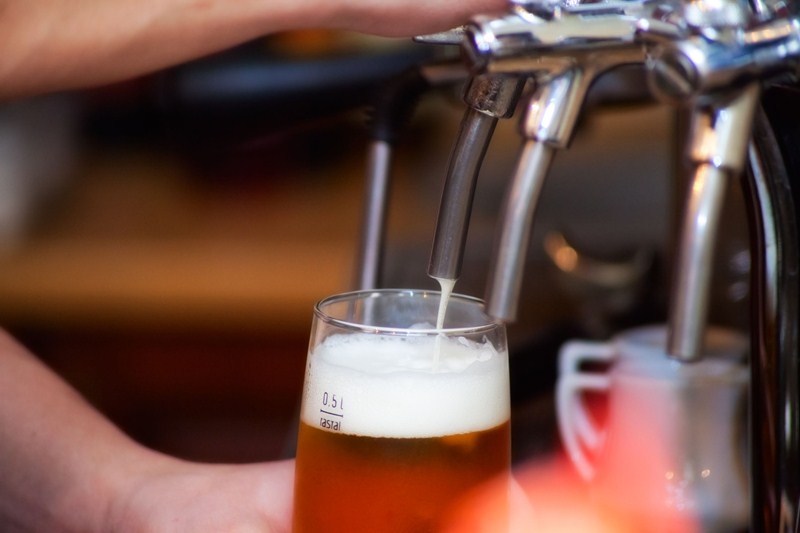
From 1 February 2025, alcohol duty on draught pints has been cut for the first time in a decade, saving drinkers 1p per pint. Small breweries also benefit from tax relief. However, duty on non-draught alcohol has risen with inflation, impacting bottled and canned drinks.

Small alcohol duty cuts on draught pints came into effect on 1 February 2025. This change was announced as part of last year’s Autumn Budget measures. The change has seen a reduction in the alcohol duty rates for draught products below 8.5% ABV by 1.7% in cash terms (or 5.1% if compared to the baseline expectation that rates would be increased with the Retail Price Index). This is the equivalent of a 1p duty reduction on an average 4.58% pint and the first duty reduction on pints of beer in 10 years.

There has also been an increase to small producer relief to help small breweries to innovate and grow. Together these tax cuts are worth £85 million and are tailored to support the alcohol sector to innovate and grow.

Commenting on the changes the Exchequer Secretary to the Treasury said:

Our pubs and brewers are an essential part the fabric of the UK and our brilliant high streets. Through draught relief, small producer relief, and expanding market access for smaller brewers, we will help boost sector growth and deliver our Plan for Change to put more money in working people’s pockets.

In addition, mandatory duty stamps for spirits will come to an end from 1 May 2025. This will help distilleries, including Scotch whisky makers, badge their products, increasing their chances to sell their products through pubs and supermarkets.

On a less positive note, also from 1 February 2025, the government has increased the alcohol duty rates that apply to all non-draught products in line with Retail Price Index inflation.

Source:HM Treasury| 03-02-2025

Spring Budget 2024 – Alcohol and Tobacco Duty

As part of the Spring Budget measures, the Chancellor announced that the duty rates on beer, cider, wine and spirits would be frozen at the current rates from 1 August 2024 until 1 February 2025. This is an extension to the previous alcohol duty freeze announced in last year’s Autumn Statement that took effect on 1 February 2024 and was scheduled to last for 6 months until 1 August 2024. The Chancellor said this move will benefit some 38,000 pubs across the UK.

It was also announced as part of the Spring Budget that the government will introduce legislation in a future finance bill to introduce a new duty on vaping products. The government has published a consultation on the detailed design and implementation of the duty. The consultation will close on 29 May 2024.

Registration for the duty will open on 1 April 2026 with the duty taking effect from 1 October 2026 alongside a proportionate increase in tobacco duties.

The duty will apply to liquids for use in vaping devices and e-cigarettes at the following rates:

  • £1 per 10ml for nicotine free liquids
  • £2 per 10ml for liquid containing nicotine at concentrations between 0.1 to 10.9mg per ml
  • £3 per 10ml for liquids containing nicotine at concentrations 11mg per ml, or above

The government will also make a one-off tobacco duty increase of £2 per 100 cigarettes or 50 grams of tobacco from 1 October 2026.

No further changes to the duty rates on tobacco products were announced.

Source:HM Treasury| 05-03-2024

Taking goods temporarily out of Great Britain

There are special rules that must be followed when goods are taken temporarily outside of Great Britain (England, Scotland and Wales). As a general rule, when goods are moved, they must be declared, and any duty owed must be paid.

You can usually claim relief from UK import duties where goods are being moved temporarily, for example, to a trade show or an event. This is called Returned Goods Relief (RGR). If RGR is available, then no import duties will be payable when the goods are returned to Great Britain.

Examples of items you might move temporarily are:

  • music equipment, such as portable instruments;
  • film and sound equipment, such as cameras;
  • education or science equipment;
  • sports equipment; or
  • samples for trade fairs.

Before you travel, you’ll need to:

  • check if you can claim relief from import duty when you return;
  • decide how you want to declare your goods; or
  • check if you need an export licence for your goods.

It is important to note that RGR only gives relief from Great Britain’s import duties. The rules regarding how you declare goods and claim relief from import duty are different in other countries.

There are different rules if you move goods temporarily between Northern Ireland and Great Britain.

Source:HM Revenue & Customs| 04-09-2023

Spring Budget 2023 – Alcohol and Tobacco Duty

As part of the Budget measures the Chancellor confirmed that the duty rates on beers, spirits, wines and ciders will increase in line with the retail price index (RPI). These rates will increase from 1 August 2023.

The Chancellor did announce some help for the hospitality industry by increasing the Draught Relief duty differential from 5% to 9.2% for qualifying beer and cider products and from 20% to 23% for qualifying wine, other fermented products (previously made wine) and spirits.

These changes will also take effect from 1 August 2023 and mean that individuals who drink draught products in on-trade venues (such as pubs) will pay less tax than on the equivalent non-draught product in off-trade venues (such as supermarkets).

There will also be changes to help reform the current duty system from 1 August 2023. This will result in the creation of standardised tax bands based on alcohol by volume. The government will also introduce two new reliefs and transitional arrangements for certain wine products.

The rates of duty on tobacco products were increased by 2% above the rate of inflation (based on RPI) effective from 6pm on 15 March 2023. The rates of duty for hand-rolling tobacco increased by 6% above RPI and the Minimum Excise Tax (MET) by 3% above RPI at the same time. The government is committed to maintaining high tobacco duty rates as a tool to reduce smoking.

Source:HM Treasury| 15-03-2023

Last orders please…

From 1 January 2021, UK businesses that export, import or transport goods to and from the EU will need to comply with a number of new regulations.

Inevitably, some will fall short and these will create delays, in your goods reaching EU customers, the goods of EU suppliers reaching you, and transport drivers spending more time than is necessary in queues of traffic as the paperwork threads are resolved.

Leaving aside the obvious need to become acquainted with, and comply with, the new regulations, to some extent the flow of goods – back and forth – will be held back by those businesses who fail to meet the required standards.

Importers and exporters would therefore be advised to consider the following:

  • Increasing your stock of goods before the end of the year such that you do not need to make further orders from EU suppliers until say February 2021, by which time – hopefully – there is a better understanding of the new customs clearance processes and other regulatory matters that need to be considered.
  • Similarly, see if you can inspire your EU customers to double up on their orders before the end of the year.

In this way you may be able to distance your business from the initial, likely chaos and minimise any additional disruption to your business as we continue to grapple with COVID challenges. 

Source: Other Mon, 19 Oct 2020 00:00:00 +0100

Alcohol duty freeze confirmed

The Chancellor, Philip Hammond recently paid a visit to an independent brewery in Liverpool and confirmed that the duty rates on beers, spirits and most ciders will be frozen at the current rates for another year from 1 February 2019. These measures mean that the average price for a bottle of whisky will be £1.50 less and a pint of beer 14p less than if the rates had increased as expected based on the duty escalator.

The Chancellor hailed the duty freeze as offering much needed support to the pubs and drink industry as well as for beer lovers who can raise a toast as Dry January has finished. However, it was not all good news as an RPI inflationary increase in the duty band for high strength sparkling cider known as ‘white ciders’ with alcohol levels above 5.5% came into effect from 1 February 2019. The price of wine also increased by RPI inflation from the same date.

Philip Hammond, Chancellor of Exchequer, said:

‘These duties would have otherwise come into effect today (1 February 2019) but instead we’re supporting an industry that employs 900,000 people across the UK. Whether it’s local pubs, craft cider mills or independent distillers, this government is helping these businesses to thrive and ensuring they remain at the heart of our economy.’

The government is also looking at the efficiency of the Small Brewers Relief to make sure the scheme continues to support the country’s smallest beer makers, helping them to grow and expand into new markets.

Autumn Budget 2018 – Alcohol and Tobacco Duty

As part of the Budget measures the Chancellor announced that the duty rates on beers, spirits and most ciders will be frozen at the current rates. These measures mean that a bottle of whisky will be £1.54 less and a pint of beer 14p less than if the rates had increased as expected based on the duty escalator.

However, the Chancellor did announce an RPI inflationary increase in the duty band for high strength sparkling cider known as ‘white ciders’ with alcohol levels above 5.5% from 1 February 2019. The price of wine will also increase by RPI inflation from the same date.

The duty rates on tobacco products were increased by 2% above the rate of inflation (based on RPI) effective from 6pm on 2 October 2018. The Chancellor also announced that the duty for hand-rolling tobacco will increase by an additional 1% (i.e. 3% above RPI) at the same time.